















Desserts
Easy Recipe for a Delicious Chocolate Pecan Pi...

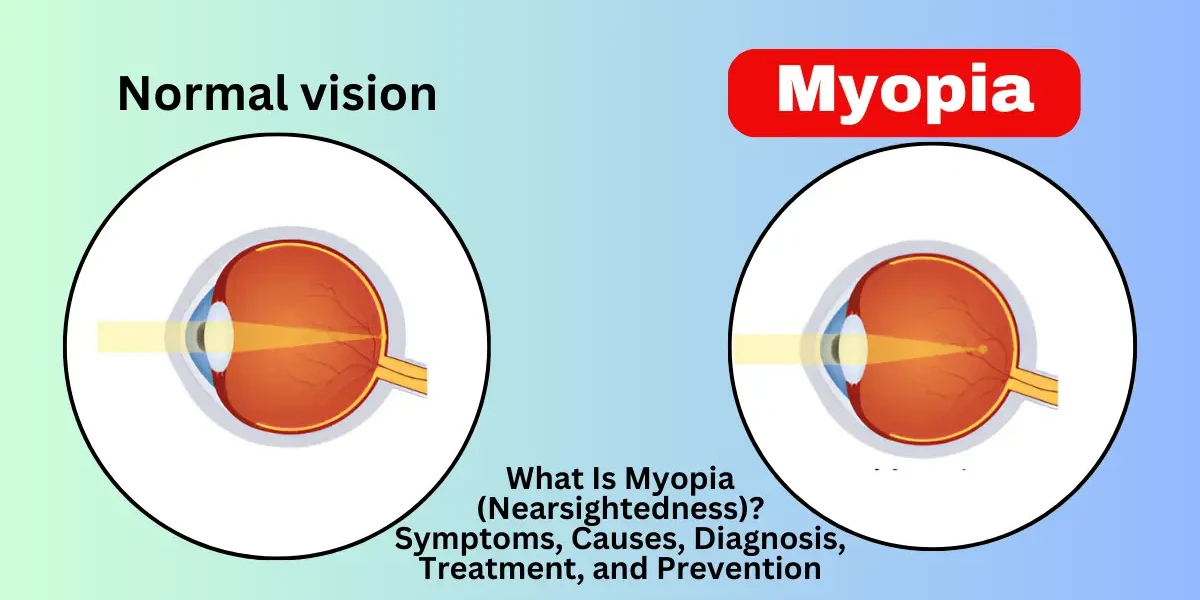
Myopia, often referred to as shortsightedness, is a prevalent eye disorder impacting countless individuals globally. Those affected can perceive close-up objects with clarity, but faraway items seem out of focus. This happens when the eye is elongated or the cornea has excessive curvature, leading light to converge before the retina rather than precisely on it.
Myopia, commonly known as nearsightedness, is a refractive error of the eye that causes distant objects to appear blurry while close objects remain clear. This condition occurs when the eyeball is too long or the cornea (the clear front surface of the eye) is too curved, causing light rays to focus in front of the retina instead of directly on it. Myopia typically develops during childhood and adolescence and may worsen as the eyes continue to grow. Genetics, excessive near work (such as reading or screen use), and limited outdoor activity are key factors contributing to its progression. Symptoms include squinting, eye strain, headaches, and difficulty seeing faraway objects like road signs or classroom boards. Myopia can be corrected with glasses, contact lenses, or refractive surgery, and early detection through regular eye exams is essential to prevent severe vision problems later in life.
Myopia can be classified into different types based on its severity, cause, and progression:
Simple Myopia (Low to Moderate Myopia) – This is the most common type, where the refractive error is mild (up to -6.00 diopters) and stabilizes in early adulthood. It usually does not lead to serious eye complications and can be easily corrected with standard eyeglasses or contact lenses.
High Myopia (Degenerative Myopia) – High myopia is a more severe form, typically exceeding -6.00 diopters, and is associated with abnormal elongation of the eyeball. This condition increases the risk of retinal detachment, glaucoma, cataracts, and macular degeneration. Regular eye check-ups are crucial to monitor and manage potential complications.
Pathological Myopia – A progressive and degenerative form of high myopia that leads to structural changes in the retina and choroid, often causing significant vision loss. It is usually linked to genetic factors and requires specialized treatment to prevent further deterioration.
Pseudomyopia – A temporary form of myopia caused by prolonged near work or eye strain, where the eye’s focusing muscles spasm, making distant vision blurry. Resting the eyes or using special eye drops can help relieve symptoms.
Nocturnal Myopia (Night Myopia) – Some individuals experience increased nearsightedness in low-light conditions due to the eye’s difficulty focusing properly in the dark. This type does not typically require correction unless it significantly affects nighttime activities like driving.
Understanding the different types of myopia helps in proper diagnosis and management. While some forms are easily correctable, others require ongoing medical attention to prevent vision-threatening complications. Early intervention, lifestyle adjustments, and appropriate optical corrections can help maintain healthy vision.
Myopia, or nearsightedness, is a refractive error that makes distant objects appear blurry while close-up vision remains clear. Recognizing the symptoms and signs of myopia early is crucial for timely diagnosis and treatment. Unlike sudden vision changes, myopia often develops gradually, making it easy to overlook—especially in children who may not realize their vision isn’t normal. Below, we’ll explore the key indicators in detail.
Blurry Distance Vision: The Hallmark Symptom
The most common and obvious sign of myopia is difficulty seeing faraway objects clearly. People with myopia might struggle to read street signs, recognize faces from a distance, or see the board in a classroom. Interestingly, near vision remains sharp—they can read books or use smartphones without issues. This happens because myopia causes light rays to focus in front of the retina instead of directly on it, distorting distant images.
For children, this blurriness often goes unnoticed until a teacher or parent observes them squinting or moving closer to see. Adults may realize their vision has worsened when they need to sit nearer to screens or adjust car mirrors frequently.
Eye Strain and Headaches: The Hidden Clues
Prolonged squinting or straining to see distant objects can lead to eye fatigue and tension headaches, particularly after activities like driving, watching TV, or attending a lecture. The eyes work harder to compensate for the refractive error, causing discomfort around the temples or behind the eyes.
People with undiagnosed myopia might dismiss these headaches as stress-related, but if they occur consistently after visual tasks, it’s a strong indicator of an underlying vision problem.
Squinting: The Unconscious Fix
Squinting temporarily improves focus by narrowing the light entering the eye, creating a "pinhole effect" that sharpens blurry images. While it offers short-term relief, frequent squinting is a classic red flag for myopia. Parents might notice their child squinting while watching TV or during sports, or adults may catch themselves doing it while trying to read distant text.
Difficulty with Night Vision (Nocturnal Myopia)
Many people with myopia report worsened vision in low-light conditions, such as at dusk or while driving at night. This phenomenon, called nocturnal myopia, occurs because the pupil dilates in dim lighting, exaggerating the eye’s focusing imperfections. Halos around lights or glare from oncoming headlights can make nighttime activities particularly challenging.
Children rarely complain about blurry vision because they assume everyone sees the way they do. Instead, watch for these subtle behavioral signs:
Sitting too close to screens or holding books very near their face
Declining academic performance (if they can’t see the board)
Lack of interest in outdoor sports (due to trouble tracking balls or players)
Excessive eye rubbing or frequent blinking (a sign of eye strain)
Teachers often spot these issues first, noting a child’s reluctance to participate in activities requiring distance vision.
If you or your child experience any of these symptoms, schedule a comprehensive eye exam. Early detection is key—especially for children, as untreated myopia can progress rapidly and increase the risk of serious complications later in life (like retinal detachment or glaucoma).
Myopia doesn’t develop overnight—it’s the result of a combination of genetic, environmental, and behavioral factors. Understanding what causes myopia and the key risk factors can help individuals take proactive steps to protect their vision. Below, we break down the science behind myopia development in clear, detailed paragraphs.
1. Eyeball Elongation (Axial Myopia)
The most common cause of myopia is an elongated eyeball. In a normal eye, light focuses precisely on the retina, creating a sharp image. However, if the eyeball grows too long, light rays converge in front of the retina instead of directly on it, causing distant objects to appear blurry. This structural change typically begins in childhood and progresses as the eye continues to grow. Research suggests that excessive near work (like reading or screen use) may stimulate abnormal eye elongation, though genetics also play a major role.
2. Excessive Corneal Curvature (Refractive Myopia)
In some cases, myopia occurs because the cornea (the eye’s clear front surface) is too steeply curved, or the eye’s lens is too thick. This bends light too sharply, leading to the same focusing issue—images fall short of the retina. Unlike axial myopia, which worsens as the eye grows, refractive myopia may stabilize earlier. However, both types can coexist, compounding vision problems.
1. Genetics – Family History Matters
If one or both parents are myopic, their children are 3 to 6 times more likely to develop myopia. Studies have identified multiple genes linked to eyeball growth and refractive errors, meaning some people are simply predisposed to nearsightedness. However, even with a strong genetic risk, environmental factors can influence how severely myopia progresses.
2. Prolonged Near Work – The "Close-Up" Effect
Spending long hours on activities that require intense near focus—such as reading, writing, or screen use—strains the eyes and may contribute to myopia development. Some researchers believe that sustained close-up work alters eye growth signals, encouraging elongation. This is particularly concerning for children, whose eyes are still developing. A study in Ophthalmology found that kids who spent more than 3 hours daily on near tasks had a higher myopia risk than those who balanced near and distance vision activities.
3. Lack of Outdoor Time – The Sunlight Connection
One of the most surprising discoveries in myopia research is the protective effect of outdoor exposure. Sunlight stimulates the release of dopamine in the retina, a neurotransmitter that helps regulate normal eye growth. Children who spend at least 2 hours a day outdoors have been shown to develop myopia at lower rates than those who stay indoors. Even on cloudy days, natural light appears to be beneficial—suggesting that brightness, not just UV exposure, plays a role.
4. Digital Eye Strain – The Screen Time Problem
With the rise of smartphones, tablets, and computers, excessive screen time has become a major concern. Unlike books, digital screens emit blue light and require constant refocusing, which may contribute to eye fatigue and myopia progression. The American Academy of Ophthalmology (AAO) recommends the 20-20-20 rule (every 20 minutes, look 20 feet away for 20 seconds) to reduce strain.
5. Age and Developmental Factors
Myopia most commonly begins between ages 6 and 14, when the eyes are still growing. It often stabilizes in early adulthood, but in some cases (especially with high myopia), it can continue progressing. Early-onset myopia (before age 10) tends to worsen faster and reach higher levels, increasing the risk of complications later in life.
6. Urbanization and Lifestyle Changes
Urban environments, with their emphasis on indoor schooling, limited play spaces, and high screen use, correlate with higher myopia rates. Countries like Singapore and South Korea, where children spend more time in structured academic settings, have myopia rates exceeding 80% among young adults—far higher than rural populations with more outdoor lifestyles.
Myopia doesn’t develop overnight—it progresses in stages, influenced by factors like genetics, lifestyle, and age. Understanding these stages helps in early intervention and better management. Here’s a deeper look at how myopia evolves:
In the initial stage, myopia is often mild, with a prescription ranging from -0.50 to -3.00 diopters. At this point, distant objects start appearing slightly blurry, but many people adapt by squinting or moving closer to see clearly. Children might not even realize their vision is worsening, assuming that "everyone sees this way."
This stage is crucial for early detection. If caught early, interventions like increased outdoor time, reduced near-work strain, and proper corrective lenses can slow progression. Without intervention, mild myopia can advance to moderate levels within a few years, especially during growth spurts in childhood.
When myopia progresses beyond -3.00 diopters, it enters the moderate stage. Blurriness becomes more noticeable, affecting daily activities like driving, watching TV, or recognizing faces from a distance. People in this stage rely heavily on glasses or contact lenses, and eye strain becomes more common after prolonged focus.
Moderate myopia also increases the risk of eye health issues, such as early retinal thinning. While it’s still manageable with standard corrective lenses, doctors may recommend additional strategies like orthokeratology (Ortho-K) or low-dose atropine eye drops to slow further progression, particularly in children.
High myopia is defined by a prescription stronger than -6.00 diopters. At this stage, the eyeball has elongated significantly, stretching the retina and increasing the risk of serious complications like retinal detachment, glaucoma, and myopic macular degeneration.
People with high myopia often require specialized lenses (high-index or aspheric lenses) to reduce lens thickness. Regular comprehensive eye exams are critical to monitor for degenerative changes. In some cases, refractive surgery (like ICL or LASIK) may be an option for adults, but structural eye health must be evaluated first.
Does Myopia Stop Progressing?
For most people, myopia stabilizes in their early 20s when the eyes stop growing. However, in cases of progressive or degenerative myopia, vision can continue worsening into adulthood. Factors like excessive near work, lack of sunlight, and genetics play a role in whether myopia plateaus or keeps advancing.
Recognizing these stages helps in:
Early intervention – Slowing progression in children can prevent high myopia.
Personalized treatment – Different stages require different approaches (e.g., atropine drops for kids, specialized lenses for high myopia).
Preventing complications – High myopia increases risks; regular monitoring is essential.
If you or your child are nearsighted, regular eye check-ups can track progression and adjust treatment as needed. Catching myopia early can make all the difference in long-term eye health.
Diagnosing myopia is a straightforward but thorough process that ensures accurate vision correction and detects any underlying eye health issues. If you or your child struggle with blurry distance vision, an eye exam is the first step toward clearer sight. Here’s what you can expect during a myopia diagnosis:
1. Comprehensive Eye Exam: A routine eye exam is the foundation of myopia diagnosis. An optometrist or ophthalmologist will review your medical history, including any family history of myopia or other eye conditions. They’ll ask about symptoms like squinting, headaches, or difficulty seeing distant objects. This helps determine whether further testing is needed.
2. Visual Acuity Test (Snellen Chart): The most well-known part of an eye exam is the Snellen chart test, where you read letters of varying sizes from a distance (usually 20 feet away). If you can’t clearly see the smaller lines, it suggests refractive errors like myopia. Results are recorded as fractions (e.g., 20/40), where the first number represents your vision and the second number represents normal vision.
3. Refraction Test (Phoropter or Autorefractor): To pinpoint the exact degree of myopia, the eye doctor performs a refraction test. This can be done in two ways:
Manual Refraction (Phoropter) – You look through a device called a phoropter while the doctor switches lenses, asking, "Which is clearer, option 1 or 2?" This fine-tunes your prescription.
Autorefractor – A computerized device estimates your refractive error by measuring how light changes as it enters your eye. While not as precise as a manual test, it provides a quick baseline measurement.
4. Retinoscopy: For young children or nonverbal patients, retinoscopy is especially useful. The doctor shines a light into your eye and observes how it reflects off the retina while flipping different lenses. This helps estimate whether you’re nearsighted, farsighted, or have astigmatism.
5. Slit-Lamp Examination: A slit-lamp exam allows the doctor to examine the front structures of your eye (cornea, iris, lens) under magnification. While primarily used to check for conditions like cataracts or dry eye, it ensures no physical abnormalities are contributing to vision problems.
6. Dilated Eye Exam (For High Myopia or Risk Assessment): If you have high myopia (above -6.00 diopters), your doctor may recommend a dilated eye exam. Special drops widen your pupils, allowing a detailed view of the retina and optic nerve. This helps detect complications like retinal thinning, tears, or early signs of glaucoma—conditions more common in severe myopia.
7. Additional Tests (If Needed): In some cases, further testing may be required:
Corneal Topography – Maps the curvature of the cornea, useful for contact lens fittings or pre-surgical evaluations.
Optical Coherence Tomography (OCT) – A non-invasive scan that checks for retinal damage, especially in pathological myopia.
Visual Field Test – Assesses peripheral vision, which can be affected by glaucoma (a risk with high myopia).
Children: First eye exam at 6 months, then at 3 years, before kindergarten, and every 1-2 years afterward.
Adults: Every 2 years if no vision issues, or annually if you wear glasses/contacts.
High Myopia Patients: Yearly exams to monitor retinal health.
Why Early Diagnosis Matters
Undiagnosed myopia in children can lead to:
Learning difficulties (trouble seeing the board)
Worsening vision (progressive myopia)
Increased risk of eye diseases later in life
For adults, untreated myopia can cause chronic eye strain, headaches, and safety concerns (e.g., driving at night).
Myopia, or nearsightedness, is generally a stable condition for most people, but its long-term outlook—the prognosis—varies depending on age, severity, and underlying eye health. While many individuals experience only mild vision changes that stabilize in early adulthood, others, particularly those with high myopia, face a higher risk of progressive vision deterioration and complications. Understanding the prognosis helps patients and eye care professionals manage expectations and take preventive measures.
For the majority of people with mild to moderate myopia (-0.50 to -6.00 diopters), vision changes tend to slow down and stabilize by their early to mid-20s. This happens because the eyes stop growing, reducing further elongation of the eyeball. Many adults find that their prescription remains relatively unchanged for years, only requiring minor updates to glasses or contact lenses. However, some individuals—especially those with a strong family history of myopia—may continue to experience gradual worsening into their 30s.
Childhood myopia often progresses rapidly, particularly between ages 8 and 15, when the eyes are still developing. Studies show that children with early-onset myopia (diagnosed before age 10) are more likely to develop high myopia (worse than -6.00 diopters) later in life. Without intervention, their vision can deteriorate significantly each year, increasing the risk of serious eye conditions. This is why early myopia control strategies, such as specialized glasses, orthokeratology (Ortho-K), or low-dose atropine drops, are critical in slowing progression.
High myopia (generally defined as -6.00 diopters or worse) carries a much more concerning prognosis. Because the eyeball becomes excessively elongated, the retina and other structures stretch thin, making them more vulnerable to damage. People with high myopia have a lifelong increased risk of:
Retinal detachment – The retina can tear or pull away from the back of the eye, leading to sudden vision loss if not treated immediately.
Myopic macular degeneration – The central part of the retina deteriorates, causing permanent blurriness or blind spots.
Glaucoma – Elevated eye pressure damages the optic nerve, potentially leading to peripheral vision loss.
Cataracts – The eye’s lens clouds earlier than usual, often requiring surgery.
Research suggests that individuals with high myopia are 5 times more likely to develop glaucoma and 40 times more likely to suffer retinal detachment compared to those with normal vision.
While genetics play a major role in myopia progression, environmental factors can influence long-term outcomes. Children who spend less than 2 hours per day outdoors and engage in excessive near work (reading, screens) tend to experience faster myopia progression. Conversely, those who adopt myopia control measures—such as increased outdoor time, proper lighting, and prescribed treatments—often see slower worsening of their vision.
Because myopia, especially high myopia, is a lifelong condition, regular eye exams are essential. Adults with stable myopia should still have annual check-ups to monitor for complications like retinal thinning or glaucoma. For children, biannual exams help track progression and adjust treatments as needed.
If you or your child has been diagnosed with myopia (nearsightedness), you’re probably wondering about the best treatment options. The good news is that several effective approaches can correct vision and, in some cases, even slow the progression of myopia—especially in children.
In this section, we’ll take a deep dive into myopia treatment and medication, covering everything from traditional glasses to cutting-edge therapies. Whether you're looking for simple corrections or long-term management strategies, understanding these options will help you make informed decisions about eye care.
The most common and straightforward way to treat myopia is with prescription glasses or contact lenses. These work by adjusting how light enters the eye, ensuring it focuses correctly on the retina rather than in front of it.
Glasses are the simplest solution, especially for kids or those with mild to moderate myopia. Modern lenses are lightweight, anti-reflective, and available in various materials (polycarbonate, high-index) for better comfort and durability.
Contact lenses provide a wider field of vision and are popular among athletes and adults who prefer not to wear glasses. Daily disposables, monthly lenses, and toric lenses (for astigmatism) offer flexibility depending on lifestyle needs.
While these options don’t cure myopia, they provide immediate clarity. However, for children with rapidly worsening vision, additional treatments may be necessary to slow progression.
A more advanced option, Ortho-K (Orthokeratology), involves wearing specially designed rigid gas-permeable contact lenses overnight. These lenses gently reshape the cornea while you sleep, temporarily correcting myopia so you can see clearly during the day without glasses or contacts.
Non-surgical and reversible – Effects last 1-2 days; stopping use returns the cornea to its original shape.
Slows myopia progression in children – Studies show it can reduce progression by 30-50% (American Academy of Ophthalmology).
Ideal for athletes – No need for glasses or daytime contacts.
However, Ortho-K requires strict hygiene to avoid infections, and not everyone is a candidate. An eye doctor must assess corneal health before fitting these lenses.
One of the most promising treatments for childhood myopia control is low-dose atropine eye drops. Originally used to dilate pupils, atropine in very small concentrations (typically 0.01%) has been shown to slow myopia progression by up to 50% without significant side effects.
How It Works:
The exact mechanism isn’t fully understood, but atropine may relax excessive eye growth signals.
Applied once daily at bedtime, it doesn’t blur vision like higher doses.
Long-term studies (such as the LAMP study) confirm its safety and effectiveness over several years.
While not a cure, atropine therapy can buy time for children, reducing the risk of developing high myopia and its complications.
For adults with stable myopia (typically over age 21), refractive surgery offers a long-term solution by reshaping the cornea or implanting a corrective lens. The most common procedures include:
LASIK (Laser-Assisted In Situ Keratomileusis)
A laser reshapes the cornea to improve focus.
Recovery is quick (24-48 hours), with minimal discomfort.
Best for mild to moderate myopia; not suitable for very thin corneas.
PRK (Photorefractive Keratectomy)
Similar to LASIK but removes the outer corneal layer (epithelium) instead of creating a flap.
Longer recovery (up to a week) but safer for patients with thin corneas or dry eyes.
ICL (Implantable Collamer Lens)
A small, flexible lens is permanently placed inside the eye (between the iris and natural lens).
Ideal for high myopia (up to -20.00 diopters) where LASIK isn’t an option.
Reversible and doesn’t alter corneal structure.
Considerations Before Surgery:
Stable prescription (no changes for at least 1-2 years).
Healthy corneas (no keratoconus or severe dryness).
Realistic expectations – While highly effective, some may still need reading glasses after 40.
Which Treatment Is Right for You?
The best myopia treatment depends on:
✔ Age (children benefit more from atropine/Ortho-K; adults may prefer surgery).
✔ Lifestyle (athletes might choose Ortho-K; office workers may opt for glasses).
✔ Severity (high myopia may require ICL instead of LASIK).
An eye specialist can recommend a personalized plan after a thorough exam.
Myopia isn’t entirely preventable—especially if genetics play a role—but certain lifestyle changes can slow its progression, particularly in children. Research shows that environmental factors, such as prolonged near work and limited outdoor exposure, significantly contribute to myopia development. Here’s what works:
1. Increase Time Spent Outdoors
Natural sunlight stimulates dopamine release in the retina, which helps regulate healthy eye growth. Studies suggest that children who spend at least 2 hours a day outdoors have a lower risk of developing myopia or experiencing rapid progression. Even on cloudy days, outdoor light intensity is far greater than indoor lighting, making it beneficial for eye health.
2. Follow the 20-20-20 Rule
Excessive screen time and close-up activities (reading, gaming) strain the eyes, contributing to myopia. The 20-20-20 rule helps reduce this strain: every 20 minutes, take a 20-second break and look at something 20 feet away. This relaxes the eye’s focusing mechanism and may slow myopia progression.
3. Limit Screen Time and Adjust Workspace Ergonomics
Staring at digital devices for long periods can worsen myopia, especially in children. Encourage:
Holding books/screens at least 16-18 inches away from the eyes.
Using larger fonts to reduce squinting.
Ensuring proper lighting to avoid eye strain.
4. Consider Myopia-Control Lenses or Drops
For children already diagnosed with myopia, specialized treatments can help slow progression:
Orthokeratology (Ortho-K) lenses – Worn overnight to temporarily reshape the cornea.
Low-dose atropine eye drops (0.01%) – Shown to reduce myopia progression by up to 50% in clinical trials.
Multifocal glasses/contacts – Designed to reduce focusing fatigue.
While myopia can’t always be prevented entirely, these strategies significantly reduce the risk of high myopia and its associated complications.
High myopia (generally -6.00 diopters or worse) isn’t just about stronger glasses—it increases the risk of serious eye diseases that can threaten vision. Here’s what can happen if myopia progresses unchecked:
1. Retinal Detachment
The retina is the light-sensitive layer at the back of the eye. In high myopia, the eyeball elongates excessively, stretching the retina thin. This makes it more prone to tears or detachment, a medical emergency that can lead to permanent vision loss if not treated immediately. Symptoms include:
Sudden flashes of light
Floaters (dark spots in vision)
A "curtain" blocking part of vision
2. Myopic Macular Degeneration
Unlike age-related macular degeneration (AMD), this condition affects highly myopic individuals due to extreme eyeball stretching. The macula (central vision area) deteriorates, leading to:
Blurred or distorted central vision
Difficulty recognizing faces
Permanent vision loss in severe cases
3. Glaucoma
People with high myopia have up to 3x higher risk of glaucoma, a condition where increased eye pressure damages the optic nerve. Since glaucoma progresses silently, regular eye pressure checks are crucial.
4. Cataracts at a Younger Age
Myopia increases the likelihood of early-onset cataracts (clouding of the eye’s lens). Symptoms include:
Cloudy or dim vision
Increased glare from lights
Frequent prescription changes
5. Strabismus (Lazy Eye) in Children
Uncorrected myopia in one eye can lead to amblyopia, where the brain ignores signals from the weaker eye, causing permanent vision impairment if untreated.
Regular eye exams (yearly for high myopia)
Early myopia control (Ortho-K, atropine drops)
Avoiding high-impact activities (boxing, heavy lifting) if at risk for retinal detachment
Protective eyewear for sports
Myopia is more than just blurry distance vision—it’s a growing global health concern. Recognizing myopia symptoms and signs, understanding myopia causes and risk factors, and seeking early myopia diagnosis are key to managing it effectively. With proper myopia treatment and prevention strategies, many complications can be avoided.
If you or your child experience vision problems, schedule an eye exam today. Healthy vision starts with awareness!
Would you like personalized advice on managing myopia? Consult an eye specialist for the best approach.
Myopia, commonly known as nearsightedness, is a refractive eye condition where distant objects appear blurry while close objects remain clear. This happens when the eyeball is too long or the cornea is too curved, causing light to focus in front of the retina instead of directly on it.
The primary cause of myopia is genetic predisposition, but environmental factors also play a significant role. Excessive near work (reading, screen time), lack of outdoor sunlight exposure, and poor visual habits during childhood can contribute to its development.
While mild myopia is common and manageable, progressive myopia (especially high myopia) can increase the risk of serious eye conditions like retinal detachment, glaucoma, and macular degeneration later in life.
Mild to moderate myopia is generally not serious and can be corrected with glasses, contact lenses, or surgery. However, high myopia (above -6.00 diopters) carries a higher risk of complications, making regular eye exams crucial.
A -1.00 diopter prescription is considered mild myopia. Many people function well without correction, but glasses or contacts may be needed for activities like driving or watching TV.
Currently, there is no permanent cure for myopia. However, treatments like orthokeratology (Ortho-K), atropine eye drops, and specialized contact lenses can slow progression in children. LASIK and PRK can correct vision but don’t eliminate the risk of future eye problems.
Like other myopia levels, -1.50 myopia cannot be "cured" naturally, but it can be effectively managed with glasses, contacts, or refractive surgery. Myopia control methods may help slow worsening in children.
In rare cases, high myopia can increase the risk of vision-threatening conditions like retinal detachment or myopic macular degeneration, which may lead to blindness if untreated. Regular eye check-ups help prevent severe complications.
While no natural method can reverse myopia, these habits may help slow progression:
Spend 2+ hours daily outdoors in natural light.
Follow the 20-20-20 rule (every 20 minutes, look 20 feet away for 20 seconds).
Maintain proper reading distance (at least 30cm from screens/books).
Ensure good lighting and posture while working.
-2.00 diopters is moderate myopia, meaning distance vision is noticeably blurry without correction. Glasses or contacts are usually necessary for clear vision, but this level is not considered high-risk unless it worsens.
A nutrient-rich diet supports eye health. Key foods include:
Leafy greens (spinach, kale) – Rich in lutein and zeaxanthin.
Fish (salmon, tuna) – High in omega-3 fatty acids.
Eggs and carrots – Provide vitamin A and beta-carotene.
Citrus fruits and nuts – Supply vitamin C and E for eye protection.